
Lessons from Agriculture: So Mulch to Learn!
By Kye Chapman, 25 June 2026
Introduction
One of the most important parts of my job at Hillsborough Soil and Water Conservation District is connecting agricultural producers with proper conservation practices. It’s no secret that intensive agriculture can deplete our soil resources, and Florida’s sandy soils already have a hard time holding on to key nutrients, like Carbon (C) and Nitrogen (N). Sand can cause nutrients to runoff into our surface waters when dry, or leech nutrients straight through the ground and into our aquifers when wet. Thankfully, soil researchers have found a multitude of strategies to help farmers keep those nutrients where we want them; these strategies have become part of our state’s BMPs, or Best Management Practices. Farmers who follow BMPs not only protect our soil and water but can also see larger crop yields and lower irrigation, fertilizer, and pesticide costs by not having to constantly replace what was lost due to poor management.
I believe these lessons are widely applicable, whether you own 100 acres of pasture or have a raised bed in a community garden. Regardless of the size of your plot, everybody can contribute to healthy soil and water resources. The topic this time is about mulching practices, with a highlight on green manure.
Chapter 1: Mulch
When you hear the term “mulch,” you probably think of wood chips and splinters, but it can be so much more than that. Mulching is the practice of using any material to cover the soil. Famously, long plastic sheets are what many fruit and vegetable growers use as mulch, i.e. plastic mulch. Mulches can be broadly categorized into two categories: Inorganic and Organic. Inorganic is like the aforementioned plastic mulch, but it can also be rocks, shells, and rubber (basically anything not living). Organic mulches are made from plant materials, most commonly wood chips and bark, but can also include such extremes as paper and cardboard!
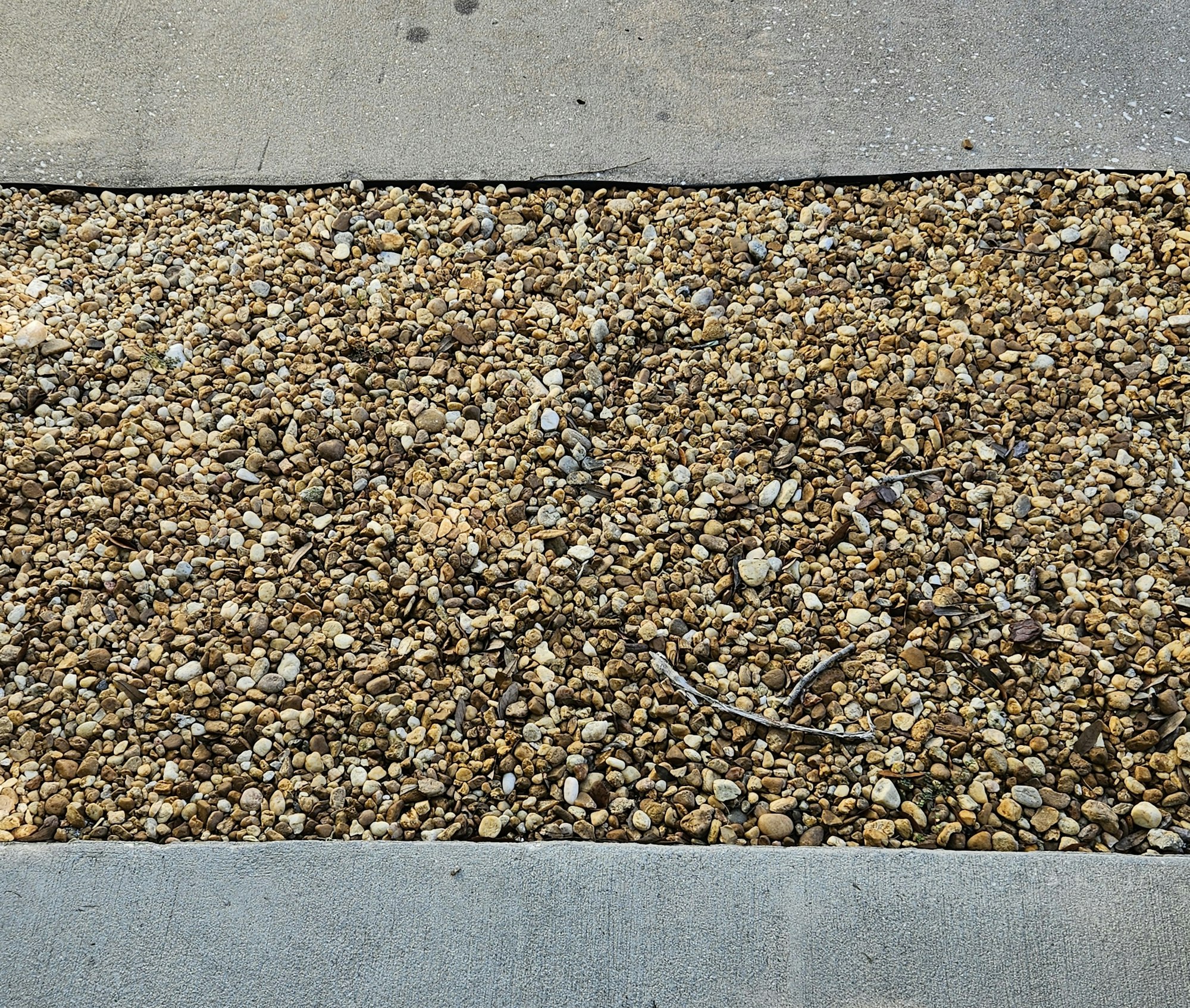
Both organic and inorganic mulches have a role in the landscape. Inorganic mulches like plastic mulch are one of the best barriers for large-scale agriculture, preventing fruit from rotting by touching wet soil, reducing pests and weeds, and by preventing soil from drying out or reaching extreme temperatures. At home, gravel and shell rock are great under downspouts. However, long term use of inorganic mulches does not have the same benefits as organic mulch. Microplastics from rubber and plastic mulch erode away and end up in our waterways as runoff. Gravel and shells overtime can calcify soil and raise soil pH to where most plants are unhappy; they also are not very good at stopping weeds or regulating soil temperature.
Overall, organic mulches provide much more benefit to soil conservation. Organic mulches are better soil insulators, keeping soil conditions more ideal for beneficial microbe growth. As the organic material breaks down, important nutrients are put back into the topsoil, right where plants and seedlings need it the most. Some materials, like pine bark, pine needles, and oak leaves, have the added benefit of acidifying the soil. This can be especially important for acid-loving plants as they cannot uptake nutrients unless the soil is acidified. Blueberries, potatoes, and radishes are crops that enjoy acidic soil, along with flowers like azaleas, roses, gardenias, and hollies.
Chapter 2: Green Manure
Turn last season’s dead crops into mulch! Despite having “manure” in the name, this practice refers to using already existing plant materials from your property as the source of mulch. Pine needles and live oak leaves are two very common materials in central Florida that you may already have. Banana and bamboo leaves are also great sources; in fact, the common recommendation for both plants is to chop unwanted stems and lay the chopped materials around wanted stems as the best way to manage and promote healthy growth. In larger agricultural operations, Sunn hemp and sorghums are among the cover crops recommended in Florida that can be mowed or conservation tilled to create green manure. Other cover crops can be directly seeded then roller-crimped in no-till plots.
In the home landscape, green manure has the added benefit of reducing the costs associated with buying mulch from big box stores. Common decorative bunch grasses can also provide green manure. These include Florida natives Muhlygrass, wiregrass, and Fakahatchee (or Eastern gamma) grass; lemongrass and citronelle are other grass species that can be used for green manure. Chopping the grass to a few inches tall during the dormant season can provide plenty of thatch for garden beds while also prepping the plant for healthier spring growth. Another way to replenish your green manure throughout the year it to “brush” your grass’s “hair.” (This is something I did working for a nursery to make sure our grass looked in sellable condition. It feels silly, but it works!) Hold a rake upside-down as if you were going to use a shovel, and starting at the ground, rake upwards along the grass blades to remove dead material. This will help the grass look fresher during the growing season while the dead blades can be used as your green manure.
Annual flower and vegetable gardens are another place where green manure techniques are very useful. As flowerbeds reach the end of their season, or once your crops have been harvested, plants can be incorporated into the soil. Mowing the plants down to soil level is a low intensity way to do this, but hand-pulling and lying the plants horizontal can also work for raised beds.
There is a risk of spreading or magnifying certain diseases when utilizing green manure. If your plants are declining because of disease, composting or disposing of the infested plant material would be the better choice. If you are doing two closely related crops in a row (e.g., tomatoes followed by peppers), only use green manure from an unrelated plant (in this case, using clippings from lemongrass would be better for your peppers than the old tomato vines).
Chapter 3: Living Mulch
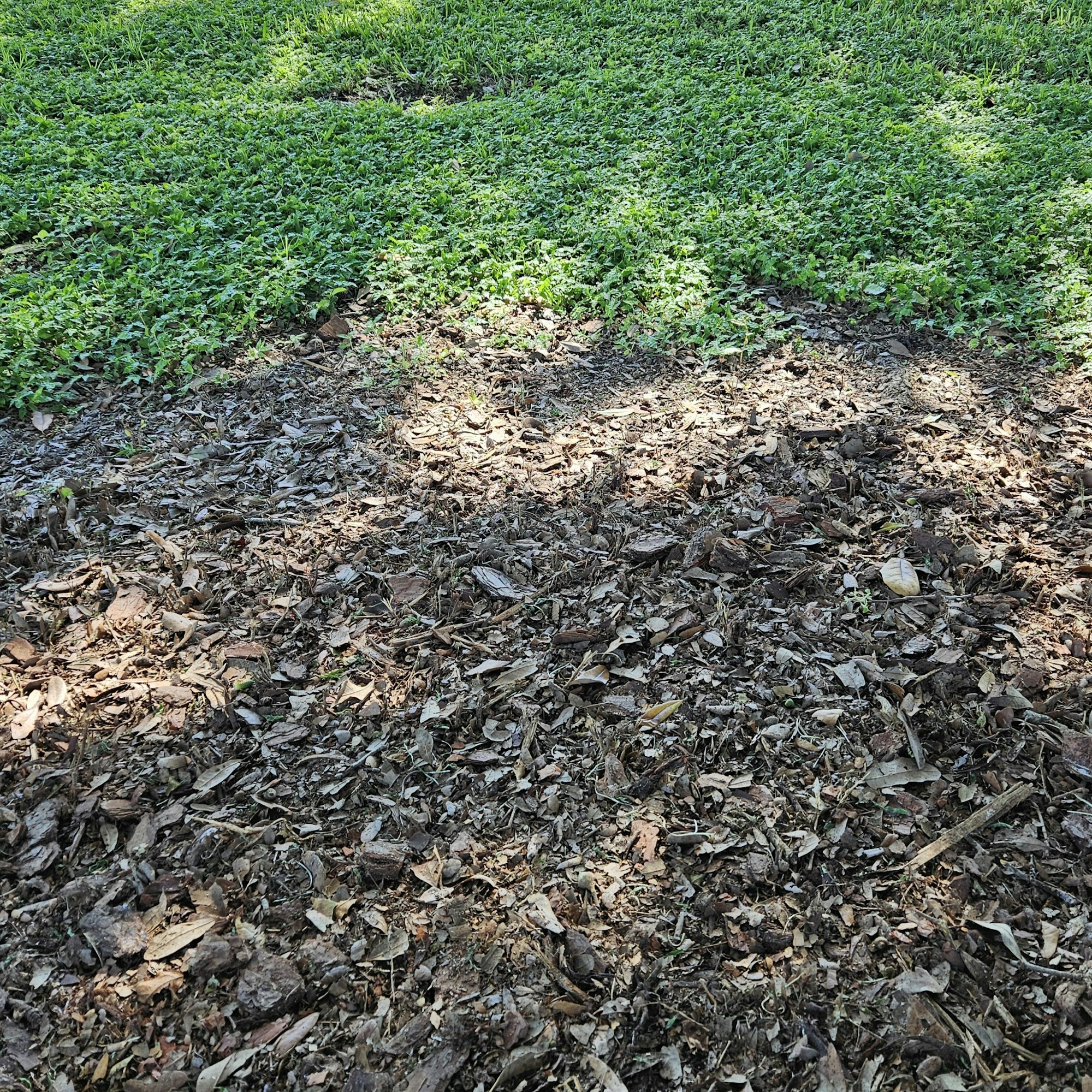
While mulch is most commonly dead or non-living, living plants can also be used as soil cover. Low growing legumes are often a recommendation for living mulch, as they do not typically get in the way of the cash crop’s growth, reduce harmful pests and weeds, and provide soil regulating effects (less soil erosion, insulate for temperature, reduces daytime water loss, etc.). Long-lived perennial legumes like Rhizomal Perennial Peanut and Pinto Peanut are recommended as living mulch underneath fruit and nut trees for all these reasons, plus being some of the most efficient nitrogen fixators available. Many clover species also are used for nitrogen-fixing living mulch. Florida natives like sunshine mimosa, frog fruit, and creeping river sage are also low-growing groundcovers that tolerate many different conditions and have low resource needs; as they are typically sold in 6” pots, these may be more accessible for smaller landowners and home environments. They may be already growing in your yard! Take cuttings of their rhizomes and transplant them where they can be most beneficial for free living mulch.
Many legumes are used as living mulch because most legumes fix atmospheric nitrogen, but they aren’t the only plants that have nutritive benefits. Buckwheat is well-known for scavenging phosphorous, and it grows well even in extreme South Florida. Many tuber vegetables, most famously Daikon radish, use their very long taproots to search for nutrients in deep soil layers and can bring leached nutrients higher into the soil column where most plants can better access them. Many mustard-family plants are said to repel harmful insects, but be warned: if allowed to set seed, mustards will be hard to remove from your landscape! Turn this living mulch into green manure or compost at flower-set to avoid this issue. Using a mixture of plants can help you meet your mulching needs.
Chapter 4: Three Sisters
I would be remiss if I didn’t take time to mention the Three Sisters method of gardening. In many North American indigenous cultures, there is a common story of how agriculture came to be. While specific details vary between cultures, this is roughly the version I grew up with. Three sister spirits saw humans struggling to find enough food to last through the harsh winters. Inseparable, these spirits together taught humans how to care for plants and instructed the humans to plant the spirits’ bodies together in the soil once the sisters died at the end of winter. Upon doing so, the spirits grew into corn, squash, and beans. Corn’s deep taproot found water and stabilized the soil for her sisters. Bean’s nitrogen-fixing properties made nutrients available for her sisters and would climb up Corn to help stabilize each other as they grew tall together. Squash would spread out along the ground, preventing harmful weeds from crowding out her and her sisters and preventing the soil from drying out. Squash also grew the quickest, so she would provide sun relief for her sisters before they were strong enough to grow tall. Succotash, or Three Sister’s Mash, is a celebratory gift enjoyed in honor of the Three Sister Spirits.
Through the Three Sisters’ story, we can see the foundation of the principles of multi-cropping/crop rotation, cover cropping, living mulch, and green manure, all practices still recommended as Best Management Practices in North American agriculture thousands of years later.
References
Crow, W. T., & Dunn, R. A. (n.d.). Soil organic matter, green manures, and cover crops for nematode management. UF/IFAS Extension. https://ask.ifas.ufl.edu/publication/VH037
Flynn, R., & Idowu, J. (2015). Nitrogen fixation by legumes (Guide A-129). New Mexico State University, College of Agricultural, Consumer and Environmental Sciences. https://pubs.nmsu.edu/_a/A129/
McIntyre, T., Gutner, R., Saracino, T., Rivas, J., & Momol, E. A. (n.d.). Mulching herbs, vegetables and fruit trees in the Florida-Friendly edible landscape (ENH1361/EP625). UF/IFAS Extension. https://ask.ifas.ufl.edu/publication/EP625
Schonbeck, M., Jerkins, D., & Ory, J. (2017). Soil health and organic farming: Practical conservation tillage. Organic Farming Research Foundation. PDF
University of Florida Institute of Food and Agricultural Sciences. (n.d.). Choosing and installing mulches. Gardening Solutions. https://gardeningsolutions.ifas.ufl.edu/care/planting/mulch/
VanDamme, I. (2025, June 19). Living mulch: A guide for vegetable growers. UF/IFAS Extension Manatee County. https://blogs.ifas.ufl.edu/manateeco/2025/06/19/living-mulch/